

The global manufacturing landscape for detergent powder is undergoing a fundamental transformation, driven not solely by market competition but increasingly by a complex web of regional and international regulations. Governments and regulatory bodies are enacting strict rules to address pressing environmental and public health concerns, directly dictating how washing powder is formulated, packaged, and marketed. For producers of powder laundry detergent, compliance is no longer a peripheral concern but a central determinant of product development, operational costs, and market access. This regulatory pressure is steering the entire industry toward greater sustainability and transparency.
1. Reformulation Mandates: Phasing Out Harmful Ingredients
The most direct impact of regulation is on the chemical composition of laundry powder. Worldwide, there is a concerted effort to phase out ingredients linked to ecological damage. The most prominent example is the global restriction and ban on phosphates. Once a common builder in detergent powder to soften water, phosphates are now heavily regulated or banned in many countries due to their role in causing eutrophication—harmful algal blooms that deplete oxygen in waterways. Manufacturers have been compelled to reformulate, replacing phosphates with more environmentally benign alternatives like zeolites, citrates, or sodium carbonate. Similarly, growing scrutiny is being placed on microplastics, synthetic polymers sometimes used for abrasion or fragrance encapsulation. Pending and existing legislation, particularly in the EU, is pushing the industry to eliminate these non-biodegradable components from powder laundry detergent, accelerating research into biodegradable alternatives.
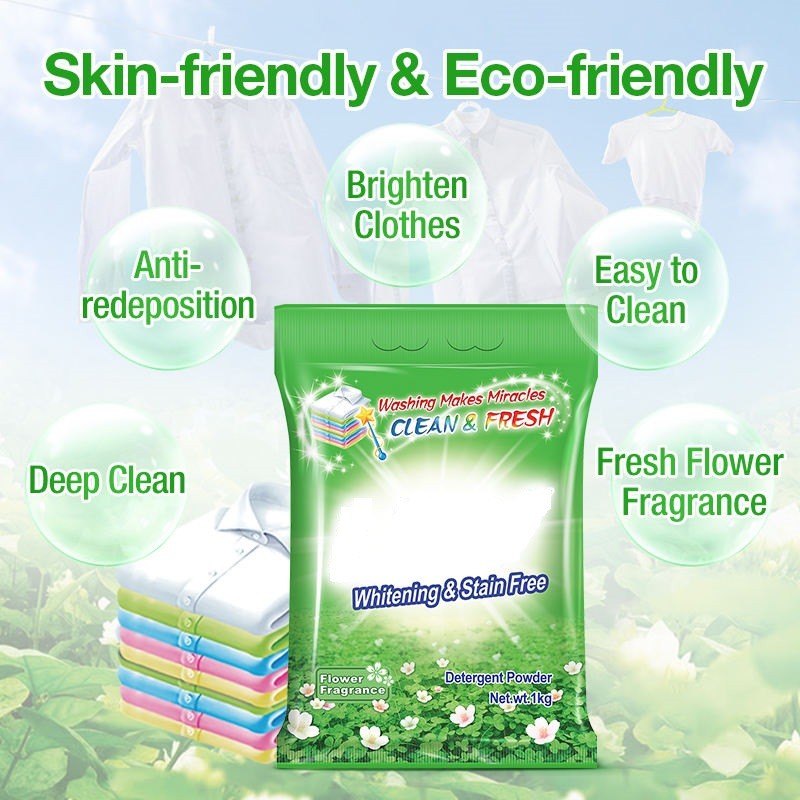
detergent powder
washing powder
2. The Push for Concentration and Waste Reduction
Regulatory frameworks are actively promoting a shift toward a circular economy, profoundly affecting product design. Initiatives like the European Union’s Circular Economy Action Plan explicitly encourage the production and consumption of concentrated products. For washing powder, this means developing super-concentrated or ultra-compact formulas. Regulations incentivize this shift because concentrated laundry powder reduces the volume of packaging required per wash, minimizing plastic and cardboard waste. It also lowers the carbon footprint associated with transportation, as more doses can be shipped in a single load. Consequently, manufacturers are investing heavily in technology to increase the density and efficacy of active ingredients, moving away from bulky, filler-heavy traditional powders.
3. Green Claims and Marketing Compliance
As consumers gravitate toward eco-friendly options, regulations are ensuring that marketing claims are substantiated. Laws such as the EU’s Green Claims Directive are cracking down on vague or unverified environmental assertions. This directly impacts products labeled as natural washing powder. Manufacturers can no longer simply use terms like "eco-friendly," "biodegradable," or "plant-based" without rigorous scientific proof and lifecycle assessment data. This requires producers to invest in third-party certifications, detailed testing, and transparent labeling. It elevates the standard for what qualifies as a natural washing powder, ensuring that such products genuinely offer a reduced environmental impact from sourcing to disposal, and protects consumers from greenwashing.
laundry powder
powder laundry detergent
4. Packaging Regulations and Extended Producer Responsibility (EPR)
Production extends beyond the powder itself to its container. Extended Producer Responsibility (EPR) schemes, enacted in various regions, mandate that manufacturers are responsible for the entire lifecycle of their packaging, including collection, recycling, or disposal. This is driving innovation in washing powder packaging, prompting a move toward mono-material, easily recyclable cardboard boxes, reducing or eliminating plastic liners, and exploring truly compostable bags. The cost of compliance with EPR is also internalized into production, influencing both product design and pricing strategies for detergent powder.
Regulations are acting as a powerful catalyst for innovation and responsibility in the powder laundry detergent industry. By mandating the removal of harmful substances like phosphates, incentivizing concentration to reduce waste, enforcing honesty in green marketing for natural washing powder, and imposing stricter packaging responsibilities, the regulatory environment is systematically reshaping production. For manufacturers, navigating this landscape requires proactive adaptation and investment in green chemistry and sustainable design. The ultimate result is an industry being steered toward producing laundry powder that is not only effective but also safer for both people and the planet, aligning commercial success with environmental stewardship.
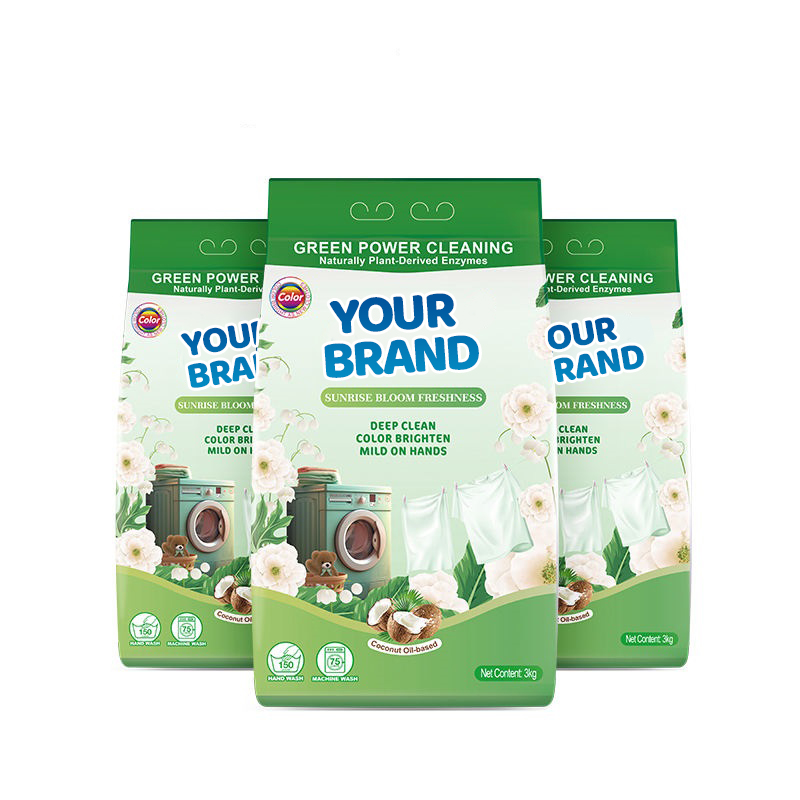
washing powder
detergent powder
Rihua Cloud offers five core services: procurement transactions, OEM/ODM, channel operations, digital solutions, and supply chain finance, to help companies solve operational problems, improve quality and efficiency, achieve sustainable growth, and promote industrial upgrading and high-quality development in the daily chemical industry.